Showing posts with label reviews. Show all posts

Friday, January 15, 2010

Review - Girl Meets God

Girl Meets God Girl Meets God by Lauren F. Winner

My rating: 2 of 5 stars

Another book that I just couldn't get through... although Lauren is a great teacher (took a writing class from her), and I've read snippets of her other books which were excellent, this was one I couldn't get into. It's very introspective and just goes on and on and on, with a writing style that got on my nerves. The style is very forced, like she is trying too hard to pattern her sentences the same way most of the time.

I like the setup of the book, though--the division into vignettes that have to do with various religious seasons. However, I think the chronological setup of the seasons was deceptive since she did not relate her story entirely chronologically. Maybe that wasn't the point, and the vignettes were just supposed to go along with the themes of the various seasons, but it left me pretty confused about what was happening after what.

Maybe I also couldn't get into it because I don't know a lot about Judaism. I could identify with her spiritual experience in the sense of converting from one worldview to another--in my case, agnostic to Christian--but I couldn't really identify with her spiritual anguish in choosing one faith over another, since I have never identified with another faith as strongly as I have with Christianity. Oh well. I suppose some books just don't speak to some people.

View all my reviews

Wednesday, December 30, 2009

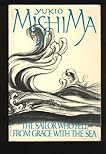
Review - The Sailor Who Fell from Grace with the Sea

The Sailor Who Fell from Grace with the Sea The Sailor Who Fell from Grace with the Sea by Yukio Mishima


My rating: 1 of 5 stars

Mishima is clearly a brilliant writer--his prose (at least, the English translation of it), puts you right in the situation. Unfortunately, this is part of the problem for me, for as well as a brilliant writer he was a profoundly disturbed man (he eventually committed seppuku, Japanese ritual suicide).

The book is, loosely, about a sailor who turns his back on dreams of glory on the sea to love a woman, and how that relationship and the world is seen by the woman's son, Noboru. Noboru is part of a gang of boys who see the world as useless, and killing, or rather the ability to end life, as the ultimate proof of their superiority over the world.

Disturbing stories used to not bother me like they do now, and I just couldn't finish this. It had an interesting concept and beautiful writing, but I had to draw the line at the kitten-killing.

View all my reviews

Review - Pickets and Dead Men: Seasons on Rainier

Pickets and Dead Men: Seasons on Rainier Pickets and Dead Men: Seasons on Rainier by Bree Loewen


My rating: 4 of 5 stars

A fascinating book about Bree Loewen's experiences over three years as a climbing ranger on Mt. Rainier. Those rangers face an incredibly tough life, and I don't blame her for quitting. Not the life for me, thanks, except maybe for the copious amounts of macaroni and cheese that Bree eats throughout the book.

View all my reviews

Sunday, November 22, 2009

Review - Girl, Interrupted

Girl, Interrupted Girl, Interrupted by Susanna Kaysen

My rating: 1 of 5 stars

I only got about half-way through this book... it was useful to me to look at the form the author chose, but since I have a brother-in-law in a mental hospital, I couldn't exactly agree with the reviewer quote on the cover that it was "triumphantly funny." I think she was probably missing the point. It made me feel less amused and more like I was going to vomit.

View all my reviews

Saturday, November 21, 2009

Review - Cordelia's Honor

Cordelia's Honor (Vorkosigan Omnibus, #1) Cordelia's Honor by Lois McMaster Bujold

My rating: 4 of 5 stars

I haven't read much recently-written science fiction other than Star Trek and Star Wars-related stuff in my reading career, so I decided to give this a try on the recommendation of a friend. I was not disappointed. Flawed, yet amazing characters, well-realized worlds, a plausible far-future, witty, and lots of explosions and righteous slaying t'boot. Some parts got a little slow, but when I picked the book back up I was quickly hooked again. Can't stand the back of the book, though... it tells you the whole story. Basically, it's about Cordelia, and she's awesome. And you should read it. Enough said.

View all my reviews

Tuesday, November 17, 2009

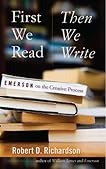
Review - First We Read, Then We Write

First We Read, Then We Write: Emerson on the Creative Process First We Read, Then We Write: Emerson on the Creative Process by Robert D. Richardson

My rating: 2 of 5 stars

I skimmed over this book--it was interesting, but it seemed like the reader had to know and like Emerson in the first place in order to appreciate it. The author is a well-known biographer of Emerson, and I just couldn't share his passion without knowing much about Emerson myself. The ideas in the various chapters seemed a bit disjointed, too, as though the author was grasping for every tidbit from Emerson's journals and letters that might have to do with writing. I was hoping for a more gradual continuum of "this is how reading affects writing." Still, it had a few good points that stood out.

Some quotes I liked: "The way to write is to throw your body at the mark when your arrows are spent" (Emerson)

"There is a time in every man's education when he arrives at the conviction that envy is ignorance; that imitation is suicide; that he must take himself for better or worse as his portion; that though the wide universe is full of good, no kernel of nourishing corn can come to him but through his toil bestowed on that plot of ground which is given him to till. The power that resides in him is new in nature, and none but he knows what that is which he can do, nor does he know until he has tried." (Emerson)

I also got a certain understanding from the idea derived from Emerson's book Representative Men Seven Lectures, that poets (and also writers in general), are representative of the average person, not unreachable hero-people. All artists have some qualities that all people can share. Richardson says that, "This representativeness of great people can fairly be called Emerson's central social and religious teaching." He points out the representativeness of God in the person of Jesus as an example of this phenomenon--Jesus is representative of the suffering of all people, thus we can identify with him. In the same way, a writer mustn't be focused on themselves--they have to have passion for describing the human condition. It is in that way that writers become elevated in people's eyes--not by being above other people, but by laying down their lives for their writing in the belief that there is someone out there who can identify with and benefit from reading them.

View all my reviews

Thursday, October 29, 2009

Review - Old School

Old School Old School by Tobias Wolff

My rating: 3 of 5 stars

Old School is about a kid at a New England boarding school where they have writing contests. Each year, the winner gets to meet a visiting author (in the book, these include Robert Frost, Ayn Rand, and Ernest Hemingway).

This was an enjoyable book for me since I have an interest in writing--one of the main themes being that writers must not be afraid to expose their true selves in their art. I liked Wolff's weaving of real authors into the story, and especially loved the smackdown he gives to Ayn Rand.

I didn't like the way he presented dialogue without quotations--at first I didn't notice it, but at one point it really confused me as to whether a character was talking or it was just part of the narrative. I can see that maybe that was his point, because it does create an atmosphere of being in the story since the quotations are not distractingly set apart, but it also added confusion. The ending worked, but it was a little meandering too. I felt like I didn't really need to know what happened in the next forty years, and that the parallels between the narrator's experience and that of Dean Makepeace could have been handled in a different way (not that I can suggest one).

View all my reviews

Wednesday, October 21, 2009

Review - The Eyre Affair

The Eyre Affair (Thursday Next, #1) The Eyre Affair by Jasper Fforde

My rating: 4 of 5 stars

This was a very fun, genre-defying book... a little bit of science fiction, alternate history, fantasy, horror, time travel, historical fiction, romance, literary parody... it's pretty much got it all, and it blends them well.

Thursday Next is a LiteraTec in an alternate 1985 UK, except that it's not the UK since Wales is an independent and somewhat hostile state. Everyone is nuts about classic literature, so LiteraTecs exist to combat literary crime. There are over two dozen other special operations units with various functions, and with whom Next comes into contact frequently throughout the book. Her father is a renegade member of SpecOps-12, the ChronoGuard. Next finds herself pitted against a heinous villain, fumbling around a long-lost love, traveling through time, shooting people and getting shot, among other things. I won't spoil the other things like the back of the book does (OMG DON'T READ THE BACK OF THE BOOK WHATEVER YOU DO IT RUINS THE FIRST 200 PAGES).

Despite that annoyance and some obnoxious writing pet peeves (occasional dialogue in which you can't tell who's talking, etc.), it's a very entertaining read. I think there are something like five more in the series now, and I would consider picking up more of them at a later date.

View all my reviews

Tuesday, October 13, 2009

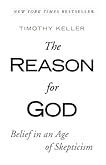
Review - The Reason for God

The Reason for God The Reason for God by Timothy Keller

My rating: 5 of 5 stars

This is the first book I've read in a long time, possibly even the first book ever, that is a well-reasoned, intellectually satisfying argument for the existence of God and his divinity in Jesus Christ.

One of the things I like most about Keller's writing is that he comes across as a down-to-earth person who obviously has great respect and patience for people's questions. Not having grown up a Christian, I have often had great difficulty relating to people who speak "Christianese" and justify faith using only the Bible, but Keller's arguments put God and Jesus in a rational, scientific, and historical context. He frames the book in two sections: confronting doubts about Christianity (scientific, cultural, Biblical, historical, etc.) and analyzing the foundations of its claims (particularly about Jesus).

The book comes down to a conclusion that I've heard in many other places--Jesus wasn't just an enlightened teacher. If you read everything he says in the Bible, you will quickly conclude that either he was the son of God . . . or he was a stark raving nutcase. But it's one or the other.

I want to summarize parts of the book here, but I would have to water it down too much for a small post, and I don't think I could do it justice. If I had to recommend one book, though, that sums up all of the reasons why I am a Christian, why my doubts six years ago were not enough to keep me from becoming one, and why, though I continue to struggle with faith, I keep coming back to Christ, it would be this one.

You won't find any irrefutable proof of God in this book (or in life, for that matter), but Keller makes an excellent, gently stated argument.

View all my reviews

Monday, October 5, 2009

Review - Many Dimensions

Many Dimensions Many Dimensions by Charles Walter Stansby Williams

My rating: 3 of 5 stars

Charles Williams was a contemporary of Lewis and Tolkien, and a member of the Inklings. His stories also deal with the fantastic, but they tend to take place in our world and have spiritual or ethical themes.

Many Dimensions is about a mysterious stone that has been wrongfully taken from the Persian Empire and is said to have belonged to King Suleiman (Solomon) in ancient times.

Lord Arglay, the Chief Justice of Britain, and his secretary Chloe Burnett try to understand the powers of the stone as they act to prevent its use for the wrong reasons.

The stone seems to be a metaphor for God in the story, but also for power in general--how different people seek to use and misuse it. Ultimately, only those who are willing not to use it for themselves at all, but to submit to its own unknown purposes are able to fully experience it.

I can't say I really "got" or liked the ending as much, but the writing was rich and interesting and the philosophical themes challenging. As much as I liked the theme, though, I felt like the story served too much as a vehicle for it and would have liked it to be more integrated.

View all my reviews

Tuesday, August 11, 2009

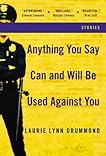
Review - Anything You Say Can and Will Be Used Against You

Anything You Say Can and Will Be Used Against You: Stories Anything You Say Can and Will Be Used Against You: Stories by Laurie Lynn Drummond

My rating: 4 of 5 stars

Delve into the brutal and contradictory world of these five female police officers, and you will find yourself simultaneously sympathetic and disturbed. Learn what life is like when your job is to help people in the most extreme situations and to be the first on the scenes of some of the most grisly crimes.

This kind of life can both save people and destroy relationships, and I found myself identifying with at least one thing about each of the main characters in these short stories. I wouldn't recommend reading it when you're already feeling upset about something, though--it is not light fare; it does not pull any punches.

View all my reviews

Thursday, July 23, 2009

Review - The Princess and the Goblin

The Princess and the Goblin (Puffin Classics - the Essential Collection) The Princess and the Goblin by George MacDonald

My rating: 4 of 5 stars

This was really an enjoyable read. George MacDonald was a fantasy writer and minister who lived from 1824-1905. To put his work into perspective, he followed closely on the heels of Hans Christian Andersen and helped to convince Lewis Carroll to publish his Alice stories. Although he is not as well known now, he also served as an inspiration for the next generation of fantasy writers (Lewis, Tolkien, L'Engle)--part of the sort of bridge between true fairy tales and the fantasy genre as we know it today.

In The Princess and the Goblin, the Princess Irene aids the miner boy Curdie in uncovering and foiling a wicked plot by the underground-dwelling goblins. A simple story, but beautifully written and full of magic.

As MacDonald was a Christian minister, his faith does imbue his stories with a sense of spirituality, but I found it to be more subtle than in Lewis' Narnia stories. The two children are aided by Princess Irene's mysterious great great grandmother, who can only be seen by those who believe she is there. Lots of connections to God in this character, particularly in the following touching scene:

The princess was so bewildered with astonishment and admiration that she could hardly thank her, and drew nigh with timidity, feeling dirty and uncomfortable. The lady was seated on a low chair by the side of the fire, with hands outstretched to take her, but the princess hung back with a troubled smile.

'Why, what's the matter?' asked her grandmother. 'You haven't been doing anything wrong—I know that by your face, though it is rather miserable. What's the matter, my dear?'

And she still held out her arms.

'Dear grandmother,' said Irene, 'I'm not so sure that I haven't done something wrong. I ought to have run up to you at once when the long-legged cat came in at the window, instead of running out on the mountain and making myself such a fright.'

'You were taken by surprise, my child, and you are not so likely to do it again. It is when people do wrong things wilfully that they are the more likely to do them again. Come.'

And still she held out her arms.

'But, grandmother, you're so beautiful and grand with your crown on; and I am so dirty with mud and rain! I should quite spoil your beautiful blue dress.'

With a merry little laugh the lady sprung from her chair, more lightly far than Irene herself could, caught the child to her bosom, and, kissing the tear-stained face over and over, sat down with her in her lap.

'Oh, grandmother! You'll make yourself such a mess!' cried Irene, clinging to her.

'You darling! do you think I care more for my dress than for my little girl?'


Anyway, wonderful story. You can read it online for free at Project Gutenberg--here is a direct link. They also have most of MacDonald's other stories since they are in the public domain. The book is followed by a sequel, The Princess and Curdie. Incidentally, there was also an animated movie of The Princess and the Goblin from 1992. I don't think I ever saw it since it looked pretty cheesy, but now I am intrigued to know whether it follows the book.

View all my reviews

Saturday, July 18, 2009

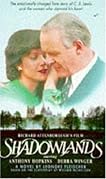
Review - Shadowlands

Shadowlands Shadowlands by Leonore Fleischer

My rating: 4 of 5 stars

To tell you the truth, I didn't expect much from a book that is a novel "based on the screenplay by William Nicholson based on his stage play." However, I was pleasantly surprised by the . . . joy of reading it! A few editing issues--a repeated paragraph here and there, etc. Other than that, however, the writing was smooth and vivid.

This book is based on the true story of C.S. Lewis' romance and marriage with Joy Davidman Gresham. Lewis, in his fifties and settled into the life of a university teacher and bachelor, thought that he knew what love was--until he realized, thanks to Joy, that he had been putting up walls to keep his feelings in and people out ever since his mother died when he was nine years old. Through his marriage to Joy, C.S. Lewis came alive again and was finally able to understand the wonder and the suffering that he had been lecturing about for so long.

Lewis' story resonated with me, as I have also been through a lot of pain in my life and a lot of effort to protect myself from it. Person by person and book by book, I catch glimpses of freedom through the holes in my own walls, making joyful connections to the other side. For, as the father of one of Lewis' students is reported in this story to have said, "We read to know that we're not alone."


View all my reviews

Tuesday, July 14, 2009

Review - C.S. Lewis: A Celebration of His Early Life

C.S. Lewis: A Celebration of His Early Life C.S. Lewis: A Celebration of His Early Life by Ruth James Cording

My rating: 3 of 5 stars

An enjoyable book, if a bit misrepresented, C.S. Lewis: A Celebration of His Early Life is a quick read in a cute coffee table format.

I say misrepresented because the last five of the sixteen chapters in the book focus on his mid-twenties and beyond. Maybe I don't think of the mid-twenties as "early life" since I'm only twenty-five myself, but I would have liked to know more about Lewis' childhood, and in a format that had more continuity than this collection of anecdotes.

It also would have been more readable if the included letters would have been placed at the ends of chapters instead of right smack in the middle of the main narrative. In addition, I spotted a few sentence fragments. Which I found to be quite eye-stabbing. While I was reading.

Despite these complaints, I did find it to be quite a sentimental and aesthetically pleasing little volume. Good brain candy for fans of Lewis and those who long for the wonder in life.

View all my reviews

Sunday, July 12, 2009

Review - The Career Mystique: Cracks in the American Dream

The Career Mystique: Cracks in the American Dream The Career Mystique: Cracks in the American Dream by Phyllis Moen

rating: 5 of 5 stars

Wow, this one took me a while. It's not often that I read books of a more academic persuasion straight through, but I found this on the library shelf while moving books at work, and it sucked me into its vortex.

The premise is that the American Dream is an illusion, but even that doesn't sum up the full complexity of this work. In 1963, there was Betty Friedan's The Feminine Mystique, which gave voice to women's "problem with no name"--that they were expected to be full-time wives and homemakers with no option to be anything else.

Now, our society has developed the "career mystique" of the title--that anyone and everyone can follow the "lock-step" pattern of education, full-time employment, and subsequently leisure-filled retirement. The folly of this is that being able to work full-time depends on having someone to take care of domestic duties. Is the problem becoming clear?

The authors elaborate:

...jobs remain designed as if employees were able and willing to focus exclusively on them. Jobs, schools, medical services, and many other aspects of contemporary life continue to assume that someone (a wife) is available during the typical workday to care for children ... to have the refrigerator fixed or the new stove delivered; to engage in the civic activities that build communities. But the wives who facilitated men's careers now have careers of their own, as do the sisters, mothers, grandmothers, friends, and neighbors that working women relied on as backup in the past. p.190

This is not to say that we should go back to the breadwinner/homemaker model, rather that the way American working society functions has not caught up with contemporary reality. This has severe consequences for the very poor, for healthy family lives, and for the future of our population. Some quotes:

Risks of poverty associated with single parenthood are now exacerbated by welfare reforms that assume that (1) jobs are available to low-skilled people, and (2) such jobs pay enough for people to work their way out of poverty. p.192

Time has become a scarce commodity in American life. This is especially problematic given the equating of work time with work commitment and employers' expectations of high commitment. As a fixed commodity, time allocated to employment is necessarily unavailable for other activities, including family relations. When all adults in families are paid employees, the family gains in income. Employees themselves may experience a sense of productive engagement and self-esteem. What is lost when everyone is earning a living is time for living. (emphasis added) p.192

Today, even in educated households, taking time out of the labor force or working a reduced schedule to raise young children, to care for aging parents, or simply to have a saner lifestyle can wreak havoc on seniority, salary, security, retirement income, and possibilities for promotion. Many workers try to solve the dilemmas of managing job, family, and personal life by controlling what is in their control: by delaying childbearing, having fewer children, or having none at all. This is a key point: Advanced nations, including the United States, are experiencing record lows in fertility precisely because most women and men want or need to be productively engaged in the workforce, and neither men nor women can figure out how to synchronize family-care work and paid work. p.194

The solution the authors suggest is that the United States must rise to the challenge of creating "integrative, flexible careers--occupational paths that acknowledge rather than ignore personal and family goals and obligations, (re)educational goals and needs throughout adulthood, and midcourse inclinations for second acts, including postretirement and civic engagement." p.199

This book was a challenge to me and I hope that its premises become a challenge to our entire country. The authors predict that, in a characteristically human way, we will not change the system until crisis necessitates it. I, for one, hope that they are proven wrong. Workers need to be respected regardless of gender and given society's blessing to pursue whatever life choices they wish--whether it's to do family-care work, paid work part-time, paid work full-time, or a mix of those at different periods of their lives. We are people who love our families and need time to rest--not antisocial robots who can dedicate our full attention and life servitude to a corporation or institution.

As individuals, we can do what is possible to focus on our loved ones rather than our jobs, but not all of us are guilty of pursuing stuff we don't need--some of us need to work like crazy just to get by. This is why some of the changes need to happen on the corporate level, where income is not keeping up with rising costs of living, and the government level, where dysfunctional programs foist unrealistic expectations on what single parents with little education can do to pull themselves and their children out of poverty. On a personal level, couples should not have to choose between both having a secure career on the one hand and the destruction of their relationships on the other.

There is anger here, and a call to action. Let's all hope that action won't be too late.


View all my reviews.

Tuesday, June 23, 2009

Review - 7 Steps to a Pain-Free Life

7 Steps to a Pain-Free Life: How to Rapidly Relieve Back and Neck Pain 7 Steps to a Pain-Free Life: How to Rapidly Relieve Back and Neck Pain by Robin McKenzie

rating: 3 of 5 stars
The writing was pretty redundant and every case study had the annoying style of a blaring advertisement, but the exercises really work. Get this book and you too can be pain-free!


View all my reviews.

Tuesday, June 16, 2009

Review - Sister Carrie

Sister Carrie: The Unexpurgated Edition (Penguin Classics) Sister Carrie: The Unexpurgated Edition by Theodore Dreiser

rating: 3 of 5 stars

Sister Carrie, written at the turn of the 20th century and considered one of the "great American novels," also has an infamous history of censorship which is fascinating in its own right. I chose to read the free online version of the restored Pennsylvania edition. I understand that the "unexpurgated edition" is based off of that one.

On the surface, the novel is the story of Caroline Meeber, who moves from rural Wisconsin to Chicago in hopes of seeking her fortune. Unhappy with her work prospects due to her lack of experience and the less-than-enthusiastic welcome she gets from her sister and brother-in-law, Carrie is tempted away from a hand-to-mouth existence by Charles Drouet, a traveling salesman who buys her nice clothes and gets her to live with him. Eventually she realizes the shallowness of Drouet's personality and casts in her lot with George Hurstwood, a (unbeknownst to her) married man. This sets them on a path that leads to Carrie's stardom as an actress and Hurstwood's very steep downfall.

The book is dense and not easy to get through, but in the end I did like it. There are two things in particular that I noticed:

1. It is a major commentary on American society. Our society is based around the idea that if we could just have more money, fame, a different lover, or a bigger place to live, we would be happier. Ultimately, Carrie is not happy with her money and fame, and chasing her eventually leads Hurstwood to indifference and suicide. Drouet continues to be his oblivious self, but arguably he is never satisfied either--he can never have meaningful relationships with anyone. This passage in Chapter 49 in which Carrie is talking with Bob Ames, a cousin of her friend Mrs. Vance, sums up this thesis:


"Your happiness is within yourself wholly if you will only believe it," he went on. "When I was quite young I felt as if I were ill-used because other boys were dressed better than I was, were more sprightly with the girls than I, and I grieved and grieved, but now I'm over that. I have found out that everyone is more or less dissatisfied. No one has exactly what his heart wishes."

"Not anybody?" she asked.

"No," he said.

Carrie looked wistfully away.

"It comes down to this," he went on. "If you have powers, cultivate them. The work of doing it will bring you as much satisfaction as you will ever get. The huzzas of the public don't mean anything. That's the aftermath--you've been paid and satisfied if you are not selfish and greedy long before that reaches you."


2. It is not necessarily a work about morality. The author, Dreiser, does mention evil in it, but his characters are not deliberately evil--they suffer because they are driven by their whims and lack understanding of what their actions do to those around them. One might argue anyway that this is a better definition of sin than the overly simplistic list of "lying/cheating/stealing." But I still don't think Dreiser was trying to teach morality in this story--just depict in a naturalistic way that people tend to do what's in their own best interests and that "fate" can lead them in different directions. He sums this up in a rather heavy-handed passage:


Many individuals are so constituted that their only thought is to obtain pleasure and shun responsibility. They would like, butterfly-like, to wing forever in a summer garden, flitting from flower to flower, and sipping honey for their sole delight. They have no feeling that any result which might flow from their action should concern them. They have no conception of the necessity of a well-organized society wherein all shall accept a certain quota of responsibility and all realize a reasonable amount of happiness. They think only of themselves because they have not yet been taught to think of society. For them pain and necessity are the great taskmasters. Laws are but the fences which circumscribe the sphere of their operations. When, after error, pain falls as a lash, they do not comprehend that their suffering is due to misbehavior. Many such an individual is so lashed by necessity and law that he falls fainting to the ground, dies hungry in the gutter or rotting in the jail and it never once flashes across his mind that he has been lashed only in so far as he has persisted in attempting to trespass the boundaries which necessity sets. A prisoner of fate, held enchained for his own delight, he does not know that the walls are tall, that the sentinels of life are forever pacing, musket in hand. He cannot perceive that all joy is within and not without. He must be for scaling the bounds of society, for overpowering the sentinel. When we hear the cries of the individual strung up by the thumbs, when we hear the ominous shot which marks the end of another victim who has thought to break loose, we may be sure that in another instance life has been misunderstood--we may be sure that society has been struggled against until death alone would stop the individual from contention and evil.


From what I hear, the original edited edition of the book removed most of the philosophy from it, made Carrie a mindless, untalented fool, and removed most of the sexual references (which I had trouble detecting anyway, but I guess by early 20th century standards they would have been blatant). Carrie doesn't fret over moving in with Drouet, Drouet doesn't pursue other ladies while living with her, and Hurstwood doesn't frequent prostitutes before he leaves his wife. In other words, the characters were significantly changed.

I enjoyed this book for the depth and the tragedy of it, but it was a very heavy read. I can see after reading the historical notes included on the website that the restored edition is superior to what was originally published and probably closer to what Dreiser intended, although I would have switched the final two chapters--49 reads like an ending, and 50 like an afterthought.

And now, my only remaining question is... whatever happened to Carrie's parents? She goes to live with her sister in Chicago, but I don't remember the book even once mentioning her contacting her parents, thinking about them, or what they thought of her leaving. In fact, I don't think it mentions her parents at all. Either she had an awful relationship with them, or she was just so self-absorbed that she didn't care if her mother was worried sick about her.


View all my reviews.

Monday, May 25, 2009

Review - Birth: The Surprising History of How We Are Born

Birth: The Surprising History of How We Are Born Birth: The Surprising History of How We Are Born by Tina Cassidy

rating: 3 of 5 stars

When I first saw this book and wanted to read it, I thought it would probably strip me of any desire ever to have children. Fortunately, it actually accomplished the opposite, affirming that no matter which way you prefer to give birth--with drugs, without drugs, squatting, lying down, with a midwife or a doctor--there is probably someone out there who has tried it before and there are lots of arguments for your preferred method.

I could detect the author's bias toward giving birth the natural way with a midwife, and frankly felt convinced by it. It seems that our history of treating birth "like a disease" rather than a natural process and interfering with all sorts of drugs, tools, and doctors who think they know better than women who have been through it has caused more harm than good.

The mini-biographies of all kinds of natural birth advocates have me convinced that if my husband and I ever have a baby, which I hope we will in a few years, I would want to try it the natural way. Pain is manageable without drugs and it sounds like there are less risks overall (for example: the numbness of an epidural can take away a woman's ability to push, thus increasing the risk of breech babies, a required C-section, or the use of forceps and episiotomies. Babies can be accidentally cut during C-sections, and those operations also increase the future risk of pregnancy complications or infertility since a placenta has difficulty attaching to scar tissue).

My main criticism of the book is that it's so packed with information that could have been better organized by time period. The author chose to organize it by category, which worked well for such an ambitious project, but the times jumped around so much that it was a little hard to follow at points. Other than that, I loved the stream of factoids and constantly interrupted my husband's own reading to share them with him.

Being informed about something always makes me much more calm about it than not knowing, so the positive impact of reading this book overall far outweighed the gruesome parts for me--but if you just want those, go ahead and Google the word symphysiotomy and you'll have had enough.


View all my reviews.

Monday, May 18, 2009

Review - This Present Darkness

This Present Darkness (Darkness Set, Book #1) This Present Darkness by Frank E. Peretti

rating: 4 of 5 stars

Peretti really hooked me with this one. I read and read all weekend until it was done.

This is the story of the small town of Ashton, secretly under the control of a demonic horde. Unbeknownst to one another, Marshall Hogan, the owner and editor of the local newspaper, and Hank Busche, new pastor of a small church, slowly uncover the hideous secrets of the town.

All characters are largely unaware, save for brief encounters, of the details of the battle between angels and demons on the spiritual plane constantly taking place around them.

Although the massive conspiracy theory was implausible and the exorcism a bit overdone, it stood up as a suspenseful work and a fascinating illustration of spiritual warfare.

I would recommend slogging through the first thirty pages or so if you're a stickler for writing style--it's worth it to get to the main story, at which point Peretti finally learns the word "said" and tones down the cliche descriptions of people.

View all my reviews.

Monday, May 11, 2009

Review - Lonesome for Bears

Lonesome for Bears: A Woman's Journey in the Tracks of the Wilderness Lonesome for Bears: A Woman's Journey in the Tracks of the Wilderness by Linda Jo Hunter

rating: 2 of 5 stars

This is another one that I picked up during my library work. I really, really want to say I liked this book, because I learned a number of interesting things about bears from it (staying calm, staying put, and glancing away from a bear are ways of showing you don't want a fight, for example). Some of the author's imagery was quite good, and I could tell that she cared about her subject. However, I had several major problems with the book:

1. The narrative in the beginning seemed disjointed. I was expecting a book about a woman who overcame her fear of bears and grew to love them, but I felt that her fear of bears was glossed over within a very short space. It made it seem like the central conflict was over within the first chapter. In addition, before she and her husband became managers at Redoubt Bay Lodge, I wasn't sure when the previous events were happening. More dates would have been better.

2. Whatever the writing issue was, I just didn't feel for the bears like I knew the author did. Her prose seemed to lack in just the spots where it needed to shine the most.

3. The whole book lacked a central theme. Because of the solved conflict right at the beginning, the rest of the book read more like a journal chronicling several mostly unrelated events.

Again, great book if you want to learn more about bears--there are several very interesting and funny stories about them, the author being an expert tracker and guide. Not so great if you want an entertaining story that will move you and keep you on the edge of your seat.

View all my reviews.