So, I submitted my first writing submission to a magazine ever--a short story for Weird Tales magazine's website series of "One-Minute Weird Tales."
After about three weeks, I received a polite rejection notice. To my surprise, I felt... great! It was wonderful to know that I'd actually put myself out there and submitted something, and that someone had at least glanced at it long enough to say "no."
For the interested, here is my story:
"Master"
My cat, Schmoopie, had been reading.
Each day after work, I would catch her with a volume of the encyclopedia.
She would stare as I put it back on the shelf.
And the next day, there would be another.
On Monday, it was Delusion - Freon
On Thursday, it was Truffle - Zygote
Yesterday my key wouldn't open the front door.
I could see her little face in the window,
calm, and completely still.
When I went back to the car, it wouldn't start.
I live in the middle of nowhere.
Each morning since, I find bowls of water and cat food on the steps.
I am saving some until there is enough to get me to the next town.
Friday, February 12, 2010


Friday, January 22, 2010
3 Weeks
I'm on the last couple days of a 3-week 1-credit course on books, paper, and preservation--right in the midst of working on my final paper on the preservation and conservation of the Dead Sea Scrolls.
This course is taking place during "UWinterim"--that gray area between Fall and Spring semesters that is synonymous with "claw out your own eyes."
Normally, a 3-credit course takes 15 weeks, so 1 credit is usually the equivalent of 5 weeks, not 3. The information we've been going through has been super-compressed, and I am experiencing info overload to the point where I've been out sick the past couple of days.
Yesterday evening I wrote five pages, but today I have reached the deer-in-headlights point. I stayed up too late last night working on it, and now I am forgetting to drink enough water.
It's about lunch time, though--maybe I can put off that paper for another half hour and make myself eat something.
This course is taking place during "UWinterim"--that gray area between Fall and Spring semesters that is synonymous with "claw out your own eyes."
Normally, a 3-credit course takes 15 weeks, so 1 credit is usually the equivalent of 5 weeks, not 3. The information we've been going through has been super-compressed, and I am experiencing info overload to the point where I've been out sick the past couple of days.
Yesterday evening I wrote five pages, but today I have reached the deer-in-headlights point. I stayed up too late last night working on it, and now I am forgetting to drink enough water.
It's about lunch time, though--maybe I can put off that paper for another half hour and make myself eat something.
Friday, January 15, 2010
Review - Girl Meets God
 Girl Meets God by Lauren F. Winner
My rating: 2 of 5 stars
Another book that I just couldn't get through... although Lauren is a great teacher (took a writing class from her), and I've read snippets of her other books which were excellent, this was one I couldn't get into. It's very introspective and just goes on and on and on, with a writing style that got on my nerves. The style is very forced, like she is trying too hard to pattern her sentences the same way most of the time.
I like the setup of the book, though--the division into vignettes that have to do with various religious seasons. However, I think the chronological setup of the seasons was deceptive since she did not relate her story entirely chronologically. Maybe that wasn't the point, and the vignettes were just supposed to go along with the themes of the various seasons, but it left me pretty confused about what was happening after what.
Maybe I also couldn't get into it because I don't know a lot about Judaism. I could identify with her spiritual experience in the sense of converting from one worldview to another--in my case, agnostic to Christian--but I couldn't really identify with her spiritual anguish in choosing one faith over another, since I have never identified with another faith as strongly as I have with Christianity. Oh well. I suppose some books just don't speak to some people.
View all my reviews
Wednesday, December 30, 2009
Review - The Sailor Who Fell from Grace with the Sea
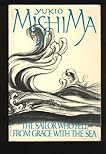 The Sailor Who Fell from Grace with the Sea by Yukio Mishima
My rating: 1 of 5 stars
Mishima is clearly a brilliant writer--his prose (at least, the English translation of it), puts you right in the situation. Unfortunately, this is part of the problem for me, for as well as a brilliant writer he was a profoundly disturbed man (he eventually committed seppuku, Japanese ritual suicide).
The book is, loosely, about a sailor who turns his back on dreams of glory on the sea to love a woman, and how that relationship and the world is seen by the woman's son, Noboru. Noboru is part of a gang of boys who see the world as useless, and killing, or rather the ability to end life, as the ultimate proof of their superiority over the world.
Disturbing stories used to not bother me like they do now, and I just couldn't finish this. It had an interesting concept and beautiful writing, but I had to draw the line at the kitten-killing.
View all my reviews
Review - Pickets and Dead Men: Seasons on Rainier
 Pickets and Dead Men: Seasons on Rainier by Bree Loewen
My rating: 4 of 5 stars
A fascinating book about Bree Loewen's experiences over three years as a climbing ranger on Mt. Rainier. Those rangers face an incredibly tough life, and I don't blame her for quitting. Not the life for me, thanks, except maybe for the copious amounts of macaroni and cheese that Bree eats throughout the book.
View all my reviews
Wednesday, November 25, 2009
At Last
Finally, finally, I'm seeing the light. The MLIS program I'm in requires 4 core courses and 8 electives. On December 17th, I'll complete the last of the core requirements with one elective under my belt t'boot! 5/12 of the way through the program... almost halfway done.
When I started this, I didn't expect the degree to take me this long. I didn't expect a lot of things to happen--people dying, pets dying, getting married, buying a house. This is technically my third year in the program, and it's going to run at least another year and a half before I can complete it.
This semester has been going better now that I have taken to heart the advice that I don't need to get straight A's. There are things that are more important than school (gasp!) It's been working well for me... less stress, less time spent on it, and I'm still averaging over a B.
And now I get to take whatever classes I want for the rest of the program! Woot!
Yesterday I signed up for Spring semester--taking "Genealogy I & II" and "Information Resources for the Health Sciences." The Genealogy series is two back-to-back one credit courses which end in April, so they will overlap with the other three credit course for the first three months, then leave me a month of breathing room to finish up finals for the second course in May.
It is exciting and sad that for the first time, I am truly looking forward to my graduate classes.
When I started this, I didn't expect the degree to take me this long. I didn't expect a lot of things to happen--people dying, pets dying, getting married, buying a house. This is technically my third year in the program, and it's going to run at least another year and a half before I can complete it.
This semester has been going better now that I have taken to heart the advice that I don't need to get straight A's. There are things that are more important than school (gasp!) It's been working well for me... less stress, less time spent on it, and I'm still averaging over a B.
And now I get to take whatever classes I want for the rest of the program! Woot!
Yesterday I signed up for Spring semester--taking "Genealogy I & II" and "Information Resources for the Health Sciences." The Genealogy series is two back-to-back one credit courses which end in April, so they will overlap with the other three credit course for the first three months, then leave me a month of breathing room to finish up finals for the second course in May.
It is exciting and sad that for the first time, I am truly looking forward to my graduate classes.
Sunday, November 22, 2009
Review - Girl, Interrupted
 Girl, Interrupted by Susanna Kaysen
My rating: 1 of 5 stars
I only got about half-way through this book... it was useful to me to look at the form the author chose, but since I have a brother-in-law in a mental hospital, I couldn't exactly agree with the reviewer quote on the cover that it was "triumphantly funny." I think she was probably missing the point. It made me feel less amused and more like I was going to vomit.
View all my reviews
Saturday, November 21, 2009
Review - Cordelia's Honor
 Cordelia's Honor by Lois McMaster Bujold
My rating: 4 of 5 stars
I haven't read much recently-written science fiction other than Star Trek and Star Wars-related stuff in my reading career, so I decided to give this a try on the recommendation of a friend. I was not disappointed. Flawed, yet amazing characters, well-realized worlds, a plausible far-future, witty, and lots of explosions and righteous slaying t'boot. Some parts got a little slow, but when I picked the book back up I was quickly hooked again. Can't stand the back of the book, though... it tells you the whole story. Basically, it's about Cordelia, and she's awesome. And you should read it. Enough said.
View all my reviews
Deaf American Poetry: An Anthology
I picked up this poetry book at the library (edited by John Lee Clark, Gallaudet University Press, 2009). Through the words of 35 deaf American poets, it conveys what it was like to be deaf over the past couple of centuries in American history. The first poets tend to be negative toward themselves, but they gradually become more self-affirming, with an angry or melancholy poem here and there. I want to post some of my favorites from the book. Some of the poems moved me nearly to tears, and overall they gave me a much greater appreciation for the deaf identity as a culture--particularly in ASL as a heart-felt mother tongue and in the ability to be completely fulfilled and whole despite the larger culture's assumption that one is "disabled" or "lacking something." I'm sure these first two are in the public domain, but correct me if I'm wrong:
To a Bride
Mary Toles Peet (1879)
Thou askest, O my friend, a song to-day;
But what soft note, what subtle melody
Can thy young heart's delicious joy convey?
In Life's enchanted lyre, one chord alone
Can thrill thee with a music all its own,
And fill thine heart with one most perfect tone.
What need, then, hast thou that I sing to thee?
June roses for thy bridal, fair to see,
Are sweeter music than my notes can be;
And song-birds flitting thro' the fragrant air,
And stars that gleam, like living eyes, from where
Thine own turn softly in thy troth-plight prayer.
Then silence, sweeter than all varied sound,
Shall fold thee soft, like loving arms around,
For life's most perfect gift thy heart hath found.
A Prayer in Signs
Alice Cornelia Jennings (before 1900)
No uttered word is ours--no solemn tone
The reverent air bears upward to the sky
No eloquence of meaning, borne along
Of voice and accent, meet the God on high.
But dare ye tell us that we do not pray--
We who so truly "lift up hands of prayer,"
And by the speaking gesture mark the way,
Our heart's desire would take to reach Him there?
"Our Father!" that appealing gesture lifts
With force more potent than the spoken word,
Desire, petition for the precious gift
Held in the hand of One All-Seeing Lord.
"In Heaven!" we picture in the circling sweep
Of arm and hand, the glorious dome above;
"Holy Thy Name!" with reverent movement keep
The sacred thought of purity and love.
"Thy Kingdom!" with imperial touch we show
The badge of royalty--the sceptre's sway;
And that Thy glorious Will may work and grow
Potent and perfect, this and every day.
Our opened hands with daily bread to fill
The Lord we ask, "Forgive as we forgive":
O hearing brothers! we are like you still--
The hardest this to pray, and this to live.
From tempter's touch, whene'er beside he stands--
We pray thee still our weakness to defend:
And by the symbol strong of broken bands
We crave deliverance, succor, to the end.
Once more the royal sign--"Thy Kingdom Thine!"
"The Power," that sign is vital, living, strong:
"The Glory": rays of brightness seem to shine
And scintillate around us, sweet and long.
"Forever and forever!" round and round
The finger sweeps, and who shall tell us then
Expression for the prayer we have not found,
Nor join us in our glad and grand "Amen"?
I am less sure about the copyright status of this one, so I will only post the last three stanzas. It's by a poet who eventually committed suicide. Beautiful, but profoundly sad.
from "I Will Take My Dreams . . ." by Felix Kowalewski
I will stand with my dreams on the top of the highest mountain;
I will brush from my hands the dust of their tears.
I will stride to the edge of the abyss before me--
The yawning abyss of dreamless years.
I will seize my dreams on the top of the highest mountain;
And then, in despair, I will fling them down!
I will see them fall, to burst in a thousand fragments
--The fairies, the music, the lovely lady's crown!
I will sit me down on the top of the highest mountain.
I will stare at the lonely waste of rock and sky.
I will lay me down at the edge of the abyss.
I will dream no more; and dreamless, I shall die.
And, part of Kowalewski's friend Loy E. Golladay's reply to his poem (obviously wasn't too happy that his friend chose to kill himself, nor agreeing with his despairing worldview):
from "Surely the Phoenix"
... You who have hurled your dreams from the highest mountain,
And watched their splintering crash to the ground;
Did you see all the stars that were torn from their courses?
Surely the universe shook at the sound!
...
Nothing begins where nothing ended,
All things enter whence all things fly;
Surely the dreams go on forever--
Only the dreamers die.
Die, then they cast away their dreaming,
When they scorn the grain in the search for chaff.
Then Death sits back in his gloomy cavern
To laugh . . . and laugh . . . and laugh.
Aaaand, on that happy note... I'm just putting off homework, so I'll go do my studently duty.
To a Bride
Mary Toles Peet (1879)
Thou askest, O my friend, a song to-day;
But what soft note, what subtle melody
Can thy young heart's delicious joy convey?
In Life's enchanted lyre, one chord alone
Can thrill thee with a music all its own,
And fill thine heart with one most perfect tone.
What need, then, hast thou that I sing to thee?
June roses for thy bridal, fair to see,
Are sweeter music than my notes can be;
And song-birds flitting thro' the fragrant air,
And stars that gleam, like living eyes, from where
Thine own turn softly in thy troth-plight prayer.
Then silence, sweeter than all varied sound,
Shall fold thee soft, like loving arms around,
For life's most perfect gift thy heart hath found.
A Prayer in Signs
Alice Cornelia Jennings (before 1900)
No uttered word is ours--no solemn tone
The reverent air bears upward to the sky
No eloquence of meaning, borne along
Of voice and accent, meet the God on high.
But dare ye tell us that we do not pray--
We who so truly "lift up hands of prayer,"
And by the speaking gesture mark the way,
Our heart's desire would take to reach Him there?
"Our Father!" that appealing gesture lifts
With force more potent than the spoken word,
Desire, petition for the precious gift
Held in the hand of One All-Seeing Lord.
"In Heaven!" we picture in the circling sweep
Of arm and hand, the glorious dome above;
"Holy Thy Name!" with reverent movement keep
The sacred thought of purity and love.
"Thy Kingdom!" with imperial touch we show
The badge of royalty--the sceptre's sway;
And that Thy glorious Will may work and grow
Potent and perfect, this and every day.
Our opened hands with daily bread to fill
The Lord we ask, "Forgive as we forgive":
O hearing brothers! we are like you still--
The hardest this to pray, and this to live.
From tempter's touch, whene'er beside he stands--
We pray thee still our weakness to defend:
And by the symbol strong of broken bands
We crave deliverance, succor, to the end.
Once more the royal sign--"Thy Kingdom Thine!"
"The Power," that sign is vital, living, strong:
"The Glory": rays of brightness seem to shine
And scintillate around us, sweet and long.
"Forever and forever!" round and round
The finger sweeps, and who shall tell us then
Expression for the prayer we have not found,
Nor join us in our glad and grand "Amen"?
I am less sure about the copyright status of this one, so I will only post the last three stanzas. It's by a poet who eventually committed suicide. Beautiful, but profoundly sad.
from "I Will Take My Dreams . . ." by Felix Kowalewski
I will stand with my dreams on the top of the highest mountain;
I will brush from my hands the dust of their tears.
I will stride to the edge of the abyss before me--
The yawning abyss of dreamless years.
I will seize my dreams on the top of the highest mountain;
And then, in despair, I will fling them down!
I will see them fall, to burst in a thousand fragments
--The fairies, the music, the lovely lady's crown!
I will sit me down on the top of the highest mountain.
I will stare at the lonely waste of rock and sky.
I will lay me down at the edge of the abyss.
I will dream no more; and dreamless, I shall die.
And, part of Kowalewski's friend Loy E. Golladay's reply to his poem (obviously wasn't too happy that his friend chose to kill himself, nor agreeing with his despairing worldview):
from "Surely the Phoenix"
... You who have hurled your dreams from the highest mountain,
And watched their splintering crash to the ground;
Did you see all the stars that were torn from their courses?
Surely the universe shook at the sound!
...
Nothing begins where nothing ended,
All things enter whence all things fly;
Surely the dreams go on forever--
Only the dreamers die.
Die, then they cast away their dreaming,
When they scorn the grain in the search for chaff.
Then Death sits back in his gloomy cavern
To laugh . . . and laugh . . . and laugh.
Aaaand, on that happy note... I'm just putting off homework, so I'll go do my studently duty.
Tuesday, November 17, 2009
Take it Apart
It's a famous proverbial situation in the field of library science--is it ethical to make available information on how to build or use nuclear weapons? My husband pointed out that even if a library buys books on how to build a nuclear weapon, it's extremely unlikely that anyone could afford the parts.
I have never gotten a question about this at the reference desk, but the other day I was walking by it when I heard a patron in the middle of asking about how to disassemble nuclear weapons. I didn't get a chance to hear the answer, but he would have made the mayor of Hiroshima proud.
I have never gotten a question about this at the reference desk, but the other day I was walking by it when I heard a patron in the middle of asking about how to disassemble nuclear weapons. I didn't get a chance to hear the answer, but he would have made the mayor of Hiroshima proud.
Review - First We Read, Then We Write
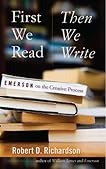 First We Read, Then We Write: Emerson on the Creative Process by Robert D. Richardson
My rating: 2 of 5 stars
I skimmed over this book--it was interesting, but it seemed like the reader had to know and like Emerson in the first place in order to appreciate it. The author is a well-known biographer of Emerson, and I just couldn't share his passion without knowing much about Emerson myself. The ideas in the various chapters seemed a bit disjointed, too, as though the author was grasping for every tidbit from Emerson's journals and letters that might have to do with writing. I was hoping for a more gradual continuum of "this is how reading affects writing." Still, it had a few good points that stood out.
Some quotes I liked: "The way to write is to throw your body at the mark when your arrows are spent" (Emerson)
"There is a time in every man's education when he arrives at the conviction that envy is ignorance; that imitation is suicide; that he must take himself for better or worse as his portion; that though the wide universe is full of good, no kernel of nourishing corn can come to him but through his toil bestowed on that plot of ground which is given him to till. The power that resides in him is new in nature, and none but he knows what that is which he can do, nor does he know until he has tried." (Emerson)
I also got a certain understanding from the idea derived from Emerson's book Representative Men Seven Lectures, that poets (and also writers in general), are representative of the average person, not unreachable hero-people. All artists have some qualities that all people can share. Richardson says that, "This representativeness of great people can fairly be called Emerson's central social and religious teaching." He points out the representativeness of God in the person of Jesus as an example of this phenomenon--Jesus is representative of the suffering of all people, thus we can identify with him. In the same way, a writer mustn't be focused on themselves--they have to have passion for describing the human condition. It is in that way that writers become elevated in people's eyes--not by being above other people, but by laying down their lives for their writing in the belief that there is someone out there who can identify with and benefit from reading them.
View all my reviews
Monday, November 2, 2009
Thursday, October 29, 2009
Review - Old School
 Old School by Tobias Wolff
My rating: 3 of 5 stars
Old School is about a kid at a New England boarding school where they have writing contests. Each year, the winner gets to meet a visiting author (in the book, these include Robert Frost, Ayn Rand, and Ernest Hemingway).
This was an enjoyable book for me since I have an interest in writing--one of the main themes being that writers must not be afraid to expose their true selves in their art. I liked Wolff's weaving of real authors into the story, and especially loved the smackdown he gives to Ayn Rand.
I didn't like the way he presented dialogue without quotations--at first I didn't notice it, but at one point it really confused me as to whether a character was talking or it was just part of the narrative. I can see that maybe that was his point, because it does create an atmosphere of being in the story since the quotations are not distractingly set apart, but it also added confusion. The ending worked, but it was a little meandering too. I felt like I didn't really need to know what happened in the next forty years, and that the parallels between the narrator's experience and that of Dean Makepeace could have been handled in a different way (not that I can suggest one).
View all my reviews
Saturday, October 24, 2009
BookCrossing
Several months ago after my husband and I moved to the small town of Lynden, WA with its Dutch heritage, and we soon requested a visit from the Welkom basket lady. Clothed in traditional Dutch garb, she came knocking at our door one Saturday morning with a basket full of goodies and coupons for a variety of free stuff and discounts on services.
Today we finally went around town and loaded up on a bunch of the free goods. Afterward, we headed home, then walked about a block to a nearby Greek restaurant. Now, I know this is terrible, but I'm not in the habit of washing my hands before I eat at a restaurant. My husband leads by example, though, so after he had headed off and returned again, I too made my voyage to the restroom thinking it was probably a good habit to pick up.
There, leaning against the mirror, I found a most intriguing and peculiar thing--a book with a "FREE BOOK" sticker on it. It was a horror novel about a dead ex-husband, and coming up on my first anniversary not something I particularly wanted to read. However, the web address on the front and the book ID number inside were enough to get me to pick it up and take it home with me.
Through it I have discovered BookCrossing: a free online community where you can register your books and either "release" them "into the wild" or give them a "controlled release" to someone you know. You can even search for books that have been released nearby and go "hunt" them--a very exciting and nerdy sport, somewhat reminiscent of Geohashing. I've seen through the BookCrossing website that there are also other such sports, like Postcrossing.
In fact, now I understand something from the last book I read, The Eyre Affair. There is a group of people in it called the Earthcrossers, who gather together whenever there is a meteor shower and attempt to catch meteorites in special mitts. At least now I sort of get what the author was parodying.
Anyway, this has the potential to be fun, and it is a neat way to get rid of books that you can't sell. I'm planning on BookCrossing five or six of them some time soon... let me know if you want one and I will mail it to you to spread the awesomeness. They are:
Shadowfires, Dean Koontz
The Woad to Wuin, Peter David
The Eyre Affair, Jasper Fforde
Many Dimensions, Charles Williams
Waters Luminous and Deep, Meredith Ann Pierce
Persepolis, Marjane Satrapi
Random House Japanese-English English-Japanese Dictionary, Seigo Nakao
Today we finally went around town and loaded up on a bunch of the free goods. Afterward, we headed home, then walked about a block to a nearby Greek restaurant. Now, I know this is terrible, but I'm not in the habit of washing my hands before I eat at a restaurant. My husband leads by example, though, so after he had headed off and returned again, I too made my voyage to the restroom thinking it was probably a good habit to pick up.
There, leaning against the mirror, I found a most intriguing and peculiar thing--a book with a "FREE BOOK" sticker on it. It was a horror novel about a dead ex-husband, and coming up on my first anniversary not something I particularly wanted to read. However, the web address on the front and the book ID number inside were enough to get me to pick it up and take it home with me.
Through it I have discovered BookCrossing: a free online community where you can register your books and either "release" them "into the wild" or give them a "controlled release" to someone you know. You can even search for books that have been released nearby and go "hunt" them--a very exciting and nerdy sport, somewhat reminiscent of Geohashing. I've seen through the BookCrossing website that there are also other such sports, like Postcrossing.
In fact, now I understand something from the last book I read, The Eyre Affair. There is a group of people in it called the Earthcrossers, who gather together whenever there is a meteor shower and attempt to catch meteorites in special mitts. At least now I sort of get what the author was parodying.
Anyway, this has the potential to be fun, and it is a neat way to get rid of books that you can't sell. I'm planning on BookCrossing five or six of them some time soon... let me know if you want one and I will mail it to you to spread the awesomeness. They are:
Shadowfires, Dean Koontz
The Woad to Wuin, Peter David
The Eyre Affair, Jasper Fforde
Many Dimensions, Charles Williams
Waters Luminous and Deep, Meredith Ann Pierce
Persepolis, Marjane Satrapi
Random House Japanese-English English-Japanese Dictionary, Seigo Nakao
Thursday, October 22, 2009
Book Titles Weird and Monotonous
Another link courtesy of American Libraries Direct: the Weird Books Room on AbeBooks!
Some of my favorites from this selection:
Why Do I Vomit?
Soldier Bear (you have to see the cover)
What to Do When the Russians Come: A Survivor's Guide
Oedipus in Disneyland
Is Your Dog Gay?
Poop-Eaters: Dung Beetles in the Food Chain
Nuclear War: What's in It for You?
How to Survive a Robot Uprising
The Bible Cure for Irritable Bowel Syndrome
Lately I've also noticed an increasingly annoying phenomenon in trendy scholarly book titles. We're an academic library, so of course we buy a lot of academic books, and it's become obvious to me that the format Trendy Title: A Trendy Subtitle That Explains What the Trendy Title is Actually About is very popular. I would vote for an even more original trendy title that can fit in one line and can also adequately represent what the book is about. Here are some examples of what I mean from the recent batch of books that we ordered:
Guesstimation: Solving the World's Problems on the Back of a Cocktail Napkin
World Without End?: Environmental Disaster and the Collapse of Empires
The Sea Woman: Sedna in Inuit Shamanism and Art in the Eastern Arctic
The Borders Within: Encounters Between Mexico and the U.S.
Al'America: Travels Through America's Arab and Islamic Roots
There are SO many of these that whenever I see one I just want to shake the author, or the publisher, or whoever is responsible for it and say "We get it already! The trendy title is very clever! Can you just tell us what the book is about instead?"
I guess I'm stuck with book titles in this line of work, from the amusing to the downright obnoxious.
Some of my favorites from this selection:
Why Do I Vomit?
Soldier Bear (you have to see the cover)
What to Do When the Russians Come: A Survivor's Guide
Oedipus in Disneyland
Is Your Dog Gay?
Poop-Eaters: Dung Beetles in the Food Chain
Nuclear War: What's in It for You?
How to Survive a Robot Uprising
The Bible Cure for Irritable Bowel Syndrome
Lately I've also noticed an increasingly annoying phenomenon in trendy scholarly book titles. We're an academic library, so of course we buy a lot of academic books, and it's become obvious to me that the format Trendy Title: A Trendy Subtitle That Explains What the Trendy Title is Actually About is very popular. I would vote for an even more original trendy title that can fit in one line and can also adequately represent what the book is about. Here are some examples of what I mean from the recent batch of books that we ordered:
Guesstimation: Solving the World's Problems on the Back of a Cocktail Napkin
World Without End?: Environmental Disaster and the Collapse of Empires
The Sea Woman: Sedna in Inuit Shamanism and Art in the Eastern Arctic
The Borders Within: Encounters Between Mexico and the U.S.
Al'America: Travels Through America's Arab and Islamic Roots
There are SO many of these that whenever I see one I just want to shake the author, or the publisher, or whoever is responsible for it and say "We get it already! The trendy title is very clever! Can you just tell us what the book is about instead?"
I guess I'm stuck with book titles in this line of work, from the amusing to the downright obnoxious.
Wednesday, October 21, 2009
Terrible Book Title
I just ordered a book called Harpoon: Into the Heart of Whaling.
Let the bad puns roll.
Let the bad puns roll.
Review - The Eyre Affair
 The Eyre Affair by Jasper Fforde
My rating: 4 of 5 stars
This was a very fun, genre-defying book... a little bit of science fiction, alternate history, fantasy, horror, time travel, historical fiction, romance, literary parody... it's pretty much got it all, and it blends them well.
Thursday Next is a LiteraTec in an alternate 1985 UK, except that it's not the UK since Wales is an independent and somewhat hostile state. Everyone is nuts about classic literature, so LiteraTecs exist to combat literary crime. There are over two dozen other special operations units with various functions, and with whom Next comes into contact frequently throughout the book. Her father is a renegade member of SpecOps-12, the ChronoGuard. Next finds herself pitted against a heinous villain, fumbling around a long-lost love, traveling through time, shooting people and getting shot, among other things. I won't spoil the other things like the back of the book does (OMG DON'T READ THE BACK OF THE BOOK WHATEVER YOU DO IT RUINS THE FIRST 200 PAGES).
Despite that annoyance and some obnoxious writing pet peeves (occasional dialogue in which you can't tell who's talking, etc.), it's a very entertaining read. I think there are something like five more in the series now, and I would consider picking up more of them at a later date.
View all my reviews
Tuesday, October 13, 2009
Review - The Reason for God
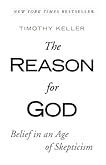 The Reason for God by Timothy Keller
My rating: 5 of 5 stars
This is the first book I've read in a long time, possibly even the first book ever, that is a well-reasoned, intellectually satisfying argument for the existence of God and his divinity in Jesus Christ.
One of the things I like most about Keller's writing is that he comes across as a down-to-earth person who obviously has great respect and patience for people's questions. Not having grown up a Christian, I have often had great difficulty relating to people who speak "Christianese" and justify faith using only the Bible, but Keller's arguments put God and Jesus in a rational, scientific, and historical context. He frames the book in two sections: confronting doubts about Christianity (scientific, cultural, Biblical, historical, etc.) and analyzing the foundations of its claims (particularly about Jesus).
The book comes down to a conclusion that I've heard in many other places--Jesus wasn't just an enlightened teacher. If you read everything he says in the Bible, you will quickly conclude that either he was the son of God . . . or he was a stark raving nutcase. But it's one or the other.
I want to summarize parts of the book here, but I would have to water it down too much for a small post, and I don't think I could do it justice. If I had to recommend one book, though, that sums up all of the reasons why I am a Christian, why my doubts six years ago were not enough to keep me from becoming one, and why, though I continue to struggle with faith, I keep coming back to Christ, it would be this one.
You won't find any irrefutable proof of God in this book (or in life, for that matter), but Keller makes an excellent, gently stated argument.
View all my reviews
Monday, October 5, 2009
Library Pet Peeves
Okay, I'm trying to think of some other material to post here other than my Goodreads reviews (although I know some of you don't look at my Goodreads account, so the cross-posting is still useful).
Library pet peeves. Well, really only one is a "library" pet peeve, I suppose.
Newspapers. I can't stand it when people don't put the newspapers back neatly. It is not hard to put the other sections back into the "A" section. I don't care if they're in order, as long as it looks like a whole paper and the front page is the first thing I see. I suppose there could be four people every day who have to rush off to the hospital to tend their ailing great-uncles and can't be bothered to take the five seconds to put the paper back correctly... and if so, I can forgive that. But come on. Otherwise it's just laziness.
I also can't take it when people take their stuff out of the microwave before the time is up, then they don't clear the display. I look at the microwave all the time in order to find out what time it is, and 05 is not a time. It drives me nuts.
But you know... at least I still have two legs and two hands and two eyes, so I can walk around and grab books and read them. That is always a good thing.
Library pet peeves. Well, really only one is a "library" pet peeve, I suppose.
Newspapers. I can't stand it when people don't put the newspapers back neatly. It is not hard to put the other sections back into the "A" section. I don't care if they're in order, as long as it looks like a whole paper and the front page is the first thing I see. I suppose there could be four people every day who have to rush off to the hospital to tend their ailing great-uncles and can't be bothered to take the five seconds to put the paper back correctly... and if so, I can forgive that. But come on. Otherwise it's just laziness.
I also can't take it when people take their stuff out of the microwave before the time is up, then they don't clear the display. I look at the microwave all the time in order to find out what time it is, and 05 is not a time. It drives me nuts.
But you know... at least I still have two legs and two hands and two eyes, so I can walk around and grab books and read them. That is always a good thing.
Review - Many Dimensions
 Many Dimensions by Charles Walter Stansby Williams
My rating: 3 of 5 stars
Charles Williams was a contemporary of Lewis and Tolkien, and a member of the Inklings. His stories also deal with the fantastic, but they tend to take place in our world and have spiritual or ethical themes.
Many Dimensions is about a mysterious stone that has been wrongfully taken from the Persian Empire and is said to have belonged to King Suleiman (Solomon) in ancient times.
Lord Arglay, the Chief Justice of Britain, and his secretary Chloe Burnett try to understand the powers of the stone as they act to prevent its use for the wrong reasons.
The stone seems to be a metaphor for God in the story, but also for power in general--how different people seek to use and misuse it. Ultimately, only those who are willing not to use it for themselves at all, but to submit to its own unknown purposes are able to fully experience it.
I can't say I really "got" or liked the ending as much, but the writing was rich and interesting and the philosophical themes challenging. As much as I liked the theme, though, I felt like the story served too much as a vehicle for it and would have liked it to be more integrated.
View all my reviews
Subscribe to:
Posts (Atom)

