Finally, finally, I'm seeing the light. The MLIS program I'm in requires 4 core courses and 8 electives. On December 17th, I'll complete the last of the core requirements with one elective under my belt t'boot! 5/12 of the way through the program... almost halfway done.
When I started this, I didn't expect the degree to take me this long. I didn't expect a lot of things to happen--people dying, pets dying, getting married, buying a house. This is technically my third year in the program, and it's going to run at least another year and a half before I can complete it.
This semester has been going better now that I have taken to heart the advice that I don't need to get straight A's. There are things that are more important than school (gasp!) It's been working well for me... less stress, less time spent on it, and I'm still averaging over a B.
And now I get to take whatever classes I want for the rest of the program! Woot!
Yesterday I signed up for Spring semester--taking "Genealogy I & II" and "Information Resources for the Health Sciences." The Genealogy series is two back-to-back one credit courses which end in April, so they will overlap with the other three credit course for the first three months, then leave me a month of breathing room to finish up finals for the second course in May.
It is exciting and sad that for the first time, I am truly looking forward to my graduate classes.
Wednesday, November 25, 2009


Sunday, November 22, 2009
Review - Girl, Interrupted
 Girl, Interrupted by Susanna Kaysen
My rating: 1 of 5 stars
I only got about half-way through this book... it was useful to me to look at the form the author chose, but since I have a brother-in-law in a mental hospital, I couldn't exactly agree with the reviewer quote on the cover that it was "triumphantly funny." I think she was probably missing the point. It made me feel less amused and more like I was going to vomit.
View all my reviews
Saturday, November 21, 2009
Review - Cordelia's Honor
 Cordelia's Honor by Lois McMaster Bujold
My rating: 4 of 5 stars
I haven't read much recently-written science fiction other than Star Trek and Star Wars-related stuff in my reading career, so I decided to give this a try on the recommendation of a friend. I was not disappointed. Flawed, yet amazing characters, well-realized worlds, a plausible far-future, witty, and lots of explosions and righteous slaying t'boot. Some parts got a little slow, but when I picked the book back up I was quickly hooked again. Can't stand the back of the book, though... it tells you the whole story. Basically, it's about Cordelia, and she's awesome. And you should read it. Enough said.
View all my reviews
Deaf American Poetry: An Anthology
I picked up this poetry book at the library (edited by John Lee Clark, Gallaudet University Press, 2009). Through the words of 35 deaf American poets, it conveys what it was like to be deaf over the past couple of centuries in American history. The first poets tend to be negative toward themselves, but they gradually become more self-affirming, with an angry or melancholy poem here and there. I want to post some of my favorites from the book. Some of the poems moved me nearly to tears, and overall they gave me a much greater appreciation for the deaf identity as a culture--particularly in ASL as a heart-felt mother tongue and in the ability to be completely fulfilled and whole despite the larger culture's assumption that one is "disabled" or "lacking something." I'm sure these first two are in the public domain, but correct me if I'm wrong:
To a Bride
Mary Toles Peet (1879)
Thou askest, O my friend, a song to-day;
But what soft note, what subtle melody
Can thy young heart's delicious joy convey?
In Life's enchanted lyre, one chord alone
Can thrill thee with a music all its own,
And fill thine heart with one most perfect tone.
What need, then, hast thou that I sing to thee?
June roses for thy bridal, fair to see,
Are sweeter music than my notes can be;
And song-birds flitting thro' the fragrant air,
And stars that gleam, like living eyes, from where
Thine own turn softly in thy troth-plight prayer.
Then silence, sweeter than all varied sound,
Shall fold thee soft, like loving arms around,
For life's most perfect gift thy heart hath found.
A Prayer in Signs
Alice Cornelia Jennings (before 1900)
No uttered word is ours--no solemn tone
The reverent air bears upward to the sky
No eloquence of meaning, borne along
Of voice and accent, meet the God on high.
But dare ye tell us that we do not pray--
We who so truly "lift up hands of prayer,"
And by the speaking gesture mark the way,
Our heart's desire would take to reach Him there?
"Our Father!" that appealing gesture lifts
With force more potent than the spoken word,
Desire, petition for the precious gift
Held in the hand of One All-Seeing Lord.
"In Heaven!" we picture in the circling sweep
Of arm and hand, the glorious dome above;
"Holy Thy Name!" with reverent movement keep
The sacred thought of purity and love.
"Thy Kingdom!" with imperial touch we show
The badge of royalty--the sceptre's sway;
And that Thy glorious Will may work and grow
Potent and perfect, this and every day.
Our opened hands with daily bread to fill
The Lord we ask, "Forgive as we forgive":
O hearing brothers! we are like you still--
The hardest this to pray, and this to live.
From tempter's touch, whene'er beside he stands--
We pray thee still our weakness to defend:
And by the symbol strong of broken bands
We crave deliverance, succor, to the end.
Once more the royal sign--"Thy Kingdom Thine!"
"The Power," that sign is vital, living, strong:
"The Glory": rays of brightness seem to shine
And scintillate around us, sweet and long.
"Forever and forever!" round and round
The finger sweeps, and who shall tell us then
Expression for the prayer we have not found,
Nor join us in our glad and grand "Amen"?
I am less sure about the copyright status of this one, so I will only post the last three stanzas. It's by a poet who eventually committed suicide. Beautiful, but profoundly sad.
from "I Will Take My Dreams . . ." by Felix Kowalewski
I will stand with my dreams on the top of the highest mountain;
I will brush from my hands the dust of their tears.
I will stride to the edge of the abyss before me--
The yawning abyss of dreamless years.
I will seize my dreams on the top of the highest mountain;
And then, in despair, I will fling them down!
I will see them fall, to burst in a thousand fragments
--The fairies, the music, the lovely lady's crown!
I will sit me down on the top of the highest mountain.
I will stare at the lonely waste of rock and sky.
I will lay me down at the edge of the abyss.
I will dream no more; and dreamless, I shall die.
And, part of Kowalewski's friend Loy E. Golladay's reply to his poem (obviously wasn't too happy that his friend chose to kill himself, nor agreeing with his despairing worldview):
from "Surely the Phoenix"
... You who have hurled your dreams from the highest mountain,
And watched their splintering crash to the ground;
Did you see all the stars that were torn from their courses?
Surely the universe shook at the sound!
...
Nothing begins where nothing ended,
All things enter whence all things fly;
Surely the dreams go on forever--
Only the dreamers die.
Die, then they cast away their dreaming,
When they scorn the grain in the search for chaff.
Then Death sits back in his gloomy cavern
To laugh . . . and laugh . . . and laugh.
Aaaand, on that happy note... I'm just putting off homework, so I'll go do my studently duty.
To a Bride
Mary Toles Peet (1879)
Thou askest, O my friend, a song to-day;
But what soft note, what subtle melody
Can thy young heart's delicious joy convey?
In Life's enchanted lyre, one chord alone
Can thrill thee with a music all its own,
And fill thine heart with one most perfect tone.
What need, then, hast thou that I sing to thee?
June roses for thy bridal, fair to see,
Are sweeter music than my notes can be;
And song-birds flitting thro' the fragrant air,
And stars that gleam, like living eyes, from where
Thine own turn softly in thy troth-plight prayer.
Then silence, sweeter than all varied sound,
Shall fold thee soft, like loving arms around,
For life's most perfect gift thy heart hath found.
A Prayer in Signs
Alice Cornelia Jennings (before 1900)
No uttered word is ours--no solemn tone
The reverent air bears upward to the sky
No eloquence of meaning, borne along
Of voice and accent, meet the God on high.
But dare ye tell us that we do not pray--
We who so truly "lift up hands of prayer,"
And by the speaking gesture mark the way,
Our heart's desire would take to reach Him there?
"Our Father!" that appealing gesture lifts
With force more potent than the spoken word,
Desire, petition for the precious gift
Held in the hand of One All-Seeing Lord.
"In Heaven!" we picture in the circling sweep
Of arm and hand, the glorious dome above;
"Holy Thy Name!" with reverent movement keep
The sacred thought of purity and love.
"Thy Kingdom!" with imperial touch we show
The badge of royalty--the sceptre's sway;
And that Thy glorious Will may work and grow
Potent and perfect, this and every day.
Our opened hands with daily bread to fill
The Lord we ask, "Forgive as we forgive":
O hearing brothers! we are like you still--
The hardest this to pray, and this to live.
From tempter's touch, whene'er beside he stands--
We pray thee still our weakness to defend:
And by the symbol strong of broken bands
We crave deliverance, succor, to the end.
Once more the royal sign--"Thy Kingdom Thine!"
"The Power," that sign is vital, living, strong:
"The Glory": rays of brightness seem to shine
And scintillate around us, sweet and long.
"Forever and forever!" round and round
The finger sweeps, and who shall tell us then
Expression for the prayer we have not found,
Nor join us in our glad and grand "Amen"?
I am less sure about the copyright status of this one, so I will only post the last three stanzas. It's by a poet who eventually committed suicide. Beautiful, but profoundly sad.
from "I Will Take My Dreams . . ." by Felix Kowalewski
I will stand with my dreams on the top of the highest mountain;
I will brush from my hands the dust of their tears.
I will stride to the edge of the abyss before me--
The yawning abyss of dreamless years.
I will seize my dreams on the top of the highest mountain;
And then, in despair, I will fling them down!
I will see them fall, to burst in a thousand fragments
--The fairies, the music, the lovely lady's crown!
I will sit me down on the top of the highest mountain.
I will stare at the lonely waste of rock and sky.
I will lay me down at the edge of the abyss.
I will dream no more; and dreamless, I shall die.
And, part of Kowalewski's friend Loy E. Golladay's reply to his poem (obviously wasn't too happy that his friend chose to kill himself, nor agreeing with his despairing worldview):
from "Surely the Phoenix"
... You who have hurled your dreams from the highest mountain,
And watched their splintering crash to the ground;
Did you see all the stars that were torn from their courses?
Surely the universe shook at the sound!
...
Nothing begins where nothing ended,
All things enter whence all things fly;
Surely the dreams go on forever--
Only the dreamers die.
Die, then they cast away their dreaming,
When they scorn the grain in the search for chaff.
Then Death sits back in his gloomy cavern
To laugh . . . and laugh . . . and laugh.
Aaaand, on that happy note... I'm just putting off homework, so I'll go do my studently duty.
Tuesday, November 17, 2009
Take it Apart
It's a famous proverbial situation in the field of library science--is it ethical to make available information on how to build or use nuclear weapons? My husband pointed out that even if a library buys books on how to build a nuclear weapon, it's extremely unlikely that anyone could afford the parts.
I have never gotten a question about this at the reference desk, but the other day I was walking by it when I heard a patron in the middle of asking about how to disassemble nuclear weapons. I didn't get a chance to hear the answer, but he would have made the mayor of Hiroshima proud.
I have never gotten a question about this at the reference desk, but the other day I was walking by it when I heard a patron in the middle of asking about how to disassemble nuclear weapons. I didn't get a chance to hear the answer, but he would have made the mayor of Hiroshima proud.
Review - First We Read, Then We Write
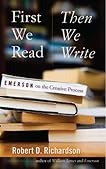 First We Read, Then We Write: Emerson on the Creative Process by Robert D. Richardson
My rating: 2 of 5 stars
I skimmed over this book--it was interesting, but it seemed like the reader had to know and like Emerson in the first place in order to appreciate it. The author is a well-known biographer of Emerson, and I just couldn't share his passion without knowing much about Emerson myself. The ideas in the various chapters seemed a bit disjointed, too, as though the author was grasping for every tidbit from Emerson's journals and letters that might have to do with writing. I was hoping for a more gradual continuum of "this is how reading affects writing." Still, it had a few good points that stood out.
Some quotes I liked: "The way to write is to throw your body at the mark when your arrows are spent" (Emerson)
"There is a time in every man's education when he arrives at the conviction that envy is ignorance; that imitation is suicide; that he must take himself for better or worse as his portion; that though the wide universe is full of good, no kernel of nourishing corn can come to him but through his toil bestowed on that plot of ground which is given him to till. The power that resides in him is new in nature, and none but he knows what that is which he can do, nor does he know until he has tried." (Emerson)
I also got a certain understanding from the idea derived from Emerson's book Representative Men Seven Lectures, that poets (and also writers in general), are representative of the average person, not unreachable hero-people. All artists have some qualities that all people can share. Richardson says that, "This representativeness of great people can fairly be called Emerson's central social and religious teaching." He points out the representativeness of God in the person of Jesus as an example of this phenomenon--Jesus is representative of the suffering of all people, thus we can identify with him. In the same way, a writer mustn't be focused on themselves--they have to have passion for describing the human condition. It is in that way that writers become elevated in people's eyes--not by being above other people, but by laying down their lives for their writing in the belief that there is someone out there who can identify with and benefit from reading them.
View all my reviews
Monday, November 2, 2009
Subscribe to:
Comments (Atom)

