Thursday, July 23, 2009

Review - The Princess and the Goblin

The Princess and the Goblin (Puffin Classics - the Essential Collection) The Princess and the Goblin by George MacDonald

My rating: 4 of 5 stars

This was really an enjoyable read. George MacDonald was a fantasy writer and minister who lived from 1824-1905. To put his work into perspective, he followed closely on the heels of Hans Christian Andersen and helped to convince Lewis Carroll to publish his Alice stories. Although he is not as well known now, he also served as an inspiration for the next generation of fantasy writers (Lewis, Tolkien, L'Engle)--part of the sort of bridge between true fairy tales and the fantasy genre as we know it today.

In The Princess and the Goblin, the Princess Irene aids the miner boy Curdie in uncovering and foiling a wicked plot by the underground-dwelling goblins. A simple story, but beautifully written and full of magic.

As MacDonald was a Christian minister, his faith does imbue his stories with a sense of spirituality, but I found it to be more subtle than in Lewis' Narnia stories. The two children are aided by Princess Irene's mysterious great great grandmother, who can only be seen by those who believe she is there. Lots of connections to God in this character, particularly in the following touching scene:

The princess was so bewildered with astonishment and admiration that she could hardly thank her, and drew nigh with timidity, feeling dirty and uncomfortable. The lady was seated on a low chair by the side of the fire, with hands outstretched to take her, but the princess hung back with a troubled smile.

'Why, what's the matter?' asked her grandmother. 'You haven't been doing anything wrong—I know that by your face, though it is rather miserable. What's the matter, my dear?'

And she still held out her arms.

'Dear grandmother,' said Irene, 'I'm not so sure that I haven't done something wrong. I ought to have run up to you at once when the long-legged cat came in at the window, instead of running out on the mountain and making myself such a fright.'

'You were taken by surprise, my child, and you are not so likely to do it again. It is when people do wrong things wilfully that they are the more likely to do them again. Come.'

And still she held out her arms.

'But, grandmother, you're so beautiful and grand with your crown on; and I am so dirty with mud and rain! I should quite spoil your beautiful blue dress.'

With a merry little laugh the lady sprung from her chair, more lightly far than Irene herself could, caught the child to her bosom, and, kissing the tear-stained face over and over, sat down with her in her lap.

'Oh, grandmother! You'll make yourself such a mess!' cried Irene, clinging to her.

'You darling! do you think I care more for my dress than for my little girl?'


Anyway, wonderful story. You can read it online for free at Project Gutenberg--here is a direct link. They also have most of MacDonald's other stories since they are in the public domain. The book is followed by a sequel, The Princess and Curdie. Incidentally, there was also an animated movie of The Princess and the Goblin from 1992. I don't think I ever saw it since it looked pretty cheesy, but now I am intrigued to know whether it follows the book.

View all my reviews

Saturday, July 18, 2009

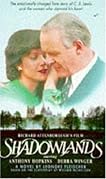
Review - Shadowlands

Shadowlands Shadowlands by Leonore Fleischer

My rating: 4 of 5 stars

To tell you the truth, I didn't expect much from a book that is a novel "based on the screenplay by William Nicholson based on his stage play." However, I was pleasantly surprised by the . . . joy of reading it! A few editing issues--a repeated paragraph here and there, etc. Other than that, however, the writing was smooth and vivid.

This book is based on the true story of C.S. Lewis' romance and marriage with Joy Davidman Gresham. Lewis, in his fifties and settled into the life of a university teacher and bachelor, thought that he knew what love was--until he realized, thanks to Joy, that he had been putting up walls to keep his feelings in and people out ever since his mother died when he was nine years old. Through his marriage to Joy, C.S. Lewis came alive again and was finally able to understand the wonder and the suffering that he had been lecturing about for so long.

Lewis' story resonated with me, as I have also been through a lot of pain in my life and a lot of effort to protect myself from it. Person by person and book by book, I catch glimpses of freedom through the holes in my own walls, making joyful connections to the other side. For, as the father of one of Lewis' students is reported in this story to have said, "We read to know that we're not alone."


View all my reviews

Tuesday, July 14, 2009

Review - C.S. Lewis: A Celebration of His Early Life

C.S. Lewis: A Celebration of His Early Life C.S. Lewis: A Celebration of His Early Life by Ruth James Cording

My rating: 3 of 5 stars

An enjoyable book, if a bit misrepresented, C.S. Lewis: A Celebration of His Early Life is a quick read in a cute coffee table format.

I say misrepresented because the last five of the sixteen chapters in the book focus on his mid-twenties and beyond. Maybe I don't think of the mid-twenties as "early life" since I'm only twenty-five myself, but I would have liked to know more about Lewis' childhood, and in a format that had more continuity than this collection of anecdotes.

It also would have been more readable if the included letters would have been placed at the ends of chapters instead of right smack in the middle of the main narrative. In addition, I spotted a few sentence fragments. Which I found to be quite eye-stabbing. While I was reading.

Despite these complaints, I did find it to be quite a sentimental and aesthetically pleasing little volume. Good brain candy for fans of Lewis and those who long for the wonder in life.

View all my reviews

Sunday, July 12, 2009

Review - The Career Mystique: Cracks in the American Dream

The Career Mystique: Cracks in the American Dream The Career Mystique: Cracks in the American Dream by Phyllis Moen

rating: 5 of 5 stars

Wow, this one took me a while. It's not often that I read books of a more academic persuasion straight through, but I found this on the library shelf while moving books at work, and it sucked me into its vortex.

The premise is that the American Dream is an illusion, but even that doesn't sum up the full complexity of this work. In 1963, there was Betty Friedan's The Feminine Mystique, which gave voice to women's "problem with no name"--that they were expected to be full-time wives and homemakers with no option to be anything else.

Now, our society has developed the "career mystique" of the title--that anyone and everyone can follow the "lock-step" pattern of education, full-time employment, and subsequently leisure-filled retirement. The folly of this is that being able to work full-time depends on having someone to take care of domestic duties. Is the problem becoming clear?

The authors elaborate:

...jobs remain designed as if employees were able and willing to focus exclusively on them. Jobs, schools, medical services, and many other aspects of contemporary life continue to assume that someone (a wife) is available during the typical workday to care for children ... to have the refrigerator fixed or the new stove delivered; to engage in the civic activities that build communities. But the wives who facilitated men's careers now have careers of their own, as do the sisters, mothers, grandmothers, friends, and neighbors that working women relied on as backup in the past. p.190

This is not to say that we should go back to the breadwinner/homemaker model, rather that the way American working society functions has not caught up with contemporary reality. This has severe consequences for the very poor, for healthy family lives, and for the future of our population. Some quotes:

Risks of poverty associated with single parenthood are now exacerbated by welfare reforms that assume that (1) jobs are available to low-skilled people, and (2) such jobs pay enough for people to work their way out of poverty. p.192

Time has become a scarce commodity in American life. This is especially problematic given the equating of work time with work commitment and employers' expectations of high commitment. As a fixed commodity, time allocated to employment is necessarily unavailable for other activities, including family relations. When all adults in families are paid employees, the family gains in income. Employees themselves may experience a sense of productive engagement and self-esteem. What is lost when everyone is earning a living is time for living. (emphasis added) p.192

Today, even in educated households, taking time out of the labor force or working a reduced schedule to raise young children, to care for aging parents, or simply to have a saner lifestyle can wreak havoc on seniority, salary, security, retirement income, and possibilities for promotion. Many workers try to solve the dilemmas of managing job, family, and personal life by controlling what is in their control: by delaying childbearing, having fewer children, or having none at all. This is a key point: Advanced nations, including the United States, are experiencing record lows in fertility precisely because most women and men want or need to be productively engaged in the workforce, and neither men nor women can figure out how to synchronize family-care work and paid work. p.194

The solution the authors suggest is that the United States must rise to the challenge of creating "integrative, flexible careers--occupational paths that acknowledge rather than ignore personal and family goals and obligations, (re)educational goals and needs throughout adulthood, and midcourse inclinations for second acts, including postretirement and civic engagement." p.199

This book was a challenge to me and I hope that its premises become a challenge to our entire country. The authors predict that, in a characteristically human way, we will not change the system until crisis necessitates it. I, for one, hope that they are proven wrong. Workers need to be respected regardless of gender and given society's blessing to pursue whatever life choices they wish--whether it's to do family-care work, paid work part-time, paid work full-time, or a mix of those at different periods of their lives. We are people who love our families and need time to rest--not antisocial robots who can dedicate our full attention and life servitude to a corporation or institution.

As individuals, we can do what is possible to focus on our loved ones rather than our jobs, but not all of us are guilty of pursuing stuff we don't need--some of us need to work like crazy just to get by. This is why some of the changes need to happen on the corporate level, where income is not keeping up with rising costs of living, and the government level, where dysfunctional programs foist unrealistic expectations on what single parents with little education can do to pull themselves and their children out of poverty. On a personal level, couples should not have to choose between both having a secure career on the one hand and the destruction of their relationships on the other.

There is anger here, and a call to action. Let's all hope that action won't be too late.


View all my reviews.

Wednesday, July 8, 2009

1947

This is odd... it kind of seems like librarians haven't changed that much since 1947, aside from the technology aspect. And the director being a man with an army of women to command.